

Developing Professional Adaptability in a Changing World
The University of Texas at Austin, Clements Center for National Security
Interdisciplinary Center Connects Students with Scholars, Practitioners, and Opportunities


The Clements Center for National Security occupies a distinctive place at The University of Texas at Austin (UT). Reporting directly to the Office of the President, it serves as a central hub for graduate education, connecting students with scholars and practitioners across departments, while acting as a clearinghouse for co-curricular programs and opportunities related to national security.
Paul Edgar, Clements Center’s deputy executive director, explains: “We’re not subordinated to a school, department, or college. This positioning enables us to be naturally interdisciplinary.”
The center’s independence and university-wide reach make it a vital resource for UT’s Lyndon B. Johnson School of Public Affairs, enriching its master’s programs with expertise and connections. One such program is the Master of Global Policy Studies, which tackles transnational challenges, such as climate change, global public health, and international development. Notable faculty include Kate Weaver, a specialist in development policy; Josh Busby, a specialist in transnational movements; and Ambassador (Ret.) Larry André, with decades of experience in African diplomacy.
The Master of National Security, launching in fall 2026, will prepare students for careers in diplomacy, intelligence, defense, and security strategy. Students will study with experts such as Sheena Greitens, a top scholar of East Asian security; Alexandra Sukalo, a former CIA analyst and historian of Soviet intelligence; and Paul Pope, who served in senior positions in the CIA. Edgar notes there are also plans to expand the university’s already exceptional faculty with “10 to 20 security studies tenure lines over the next 12 to 36 months.” The new faculty members will be posted across the university, but all of them will be accessible to graduate students.
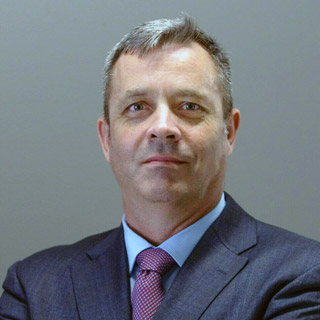
“We know the field and how to connect people — networking across think tanks, the Hill, and all areas of the executive branch within the national security sphere.” –Paul Edgar, Deputy Executive Director, Clements Center for National Security, The University of Texas at Austin
Beyond the classroom, the Clements Center supports students with research funding, hands-on extracurriculars, and a community of peers and mentors. The Strategy Club, for example, is a year-long program in which students independently study strategic theory and practice, culminating in fully funded participation in the Army War College Strategy Competition.
The Clements Center also offers to all students a steady stream of lectures, panels, workshops, simulations, and professional development activities through its partnerships with the Asia Policy Program, the Intelligence Studies Project, and the Strauss Center for International Security and Law. “It’s not just the classroom, the stage, or the podium,” Edgar emphasizes; the Clements Center provides unique access to visiting experts through small-group dinners, closed-door roundtable discussions, and networking events.
Additionally, students benefit from a comprehensive internship and fellowship database, funding for unpaid internships, and individualized career guidance — including informal placements that leverage Clements Center’s network to build meaningful professional connections.
Austin itself offers a compelling alternative to the Beltway. Edgar says students experience less agenda-driven networking, gain a distinctive perspective on federal and state interests, and enjoy a vibrant city atmosphere. Texas’ flagship university, UT, together with the Clements Center, combines world-class resources with a personalized, student-centered environment.
Fostering Scholarship and Practice Across Institutions
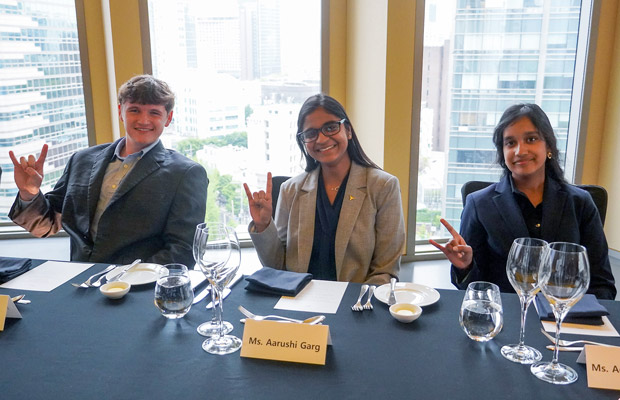
The Clements Center is a core partner in the America in the World Consortium, alongside Duke’s Program in American Grand Strategy and Johns Hopkins School of Advanced International Studies’ Kissinger Center, with the Hamilton School at the University of Florida joining more recently. Established in 2018, the consortium’s mission is to support graduate students by fostering a community within and beyond their departments and building an informal pipeline to enhance education, professional networks, and career pathways in scholarship and national security practice.
The University of Texas at Austin, Clements Center for National Security
https://www.clementscenter.org
[email protected]
512-471-2601
Contents
- Developing Professional Adaptability in a Changing World
- Georgetown University, School of Foreign Service
- University of Denver, Josef Korbel School of Global and Public Affairs
- Johns Hopkins School of Advanced International Studies
- The Fletcher School at Tufts University
- Rice University, School of Social Sciences
- Penn State University, School of International Affairs
- Augusta University, Pamplin College of Arts, Humanities, and Social Sciences
- Virginia Tech, School of Public and International Affairs
- American University, School of International Service
- Columbia University, School of International and Public Affairs
- The University of Texas at Austin, Clements Center for National Security
- George Washington University, Elliott School of International Affairs
- University of Toronto, Munk School of Global Affairs & Public Policy